By Davor Rostuhar
When I tell people that I took my three-year-old daughter on an eight-day trek across Réunion Island in the middle of the Indian Ocean, their first reaction is usually that I must be a little crazy. And maybe I am. But the truth is that I didn’t choose Réunion despite travelling with a child — I chose it precisely because I was travelling with one.
When you travel with a small child, you’re looking for a rather unusual combination of things that rarely come together in one place. You want spectacular nature, but also safety. You want the feeling of a distant world and a real adventure, but without tropical diseases, poor healthcare, or logistical chaos. You want serious hiking, but you also want to be able to wash the mud off your boots every evening, eat a hot meal, and sleep in a proper bed.
And Réunion offers exactly that.
It is a French overseas territory, essentially a piece of France dropped into the middle of the Indian Ocean. You pay in euros, your phone roaming works as if you were at home, your European Health insurance Card is valid, the roads are excellent, accommodation is comfortable, the food is great, and the overall level of safety is what you would expect in Europe. At the same time, the landscape looks as if you’ve landed on some lost tropical planet.
In fact, the island’s geography was the main reason I chose Réunion.
I’ve always loved places that are difficult to reach. The Himalayas, Papua, remote corners of the world — I’ve always been drawn to settlements that lie beyond the reach of roads. But Réunion is something special.
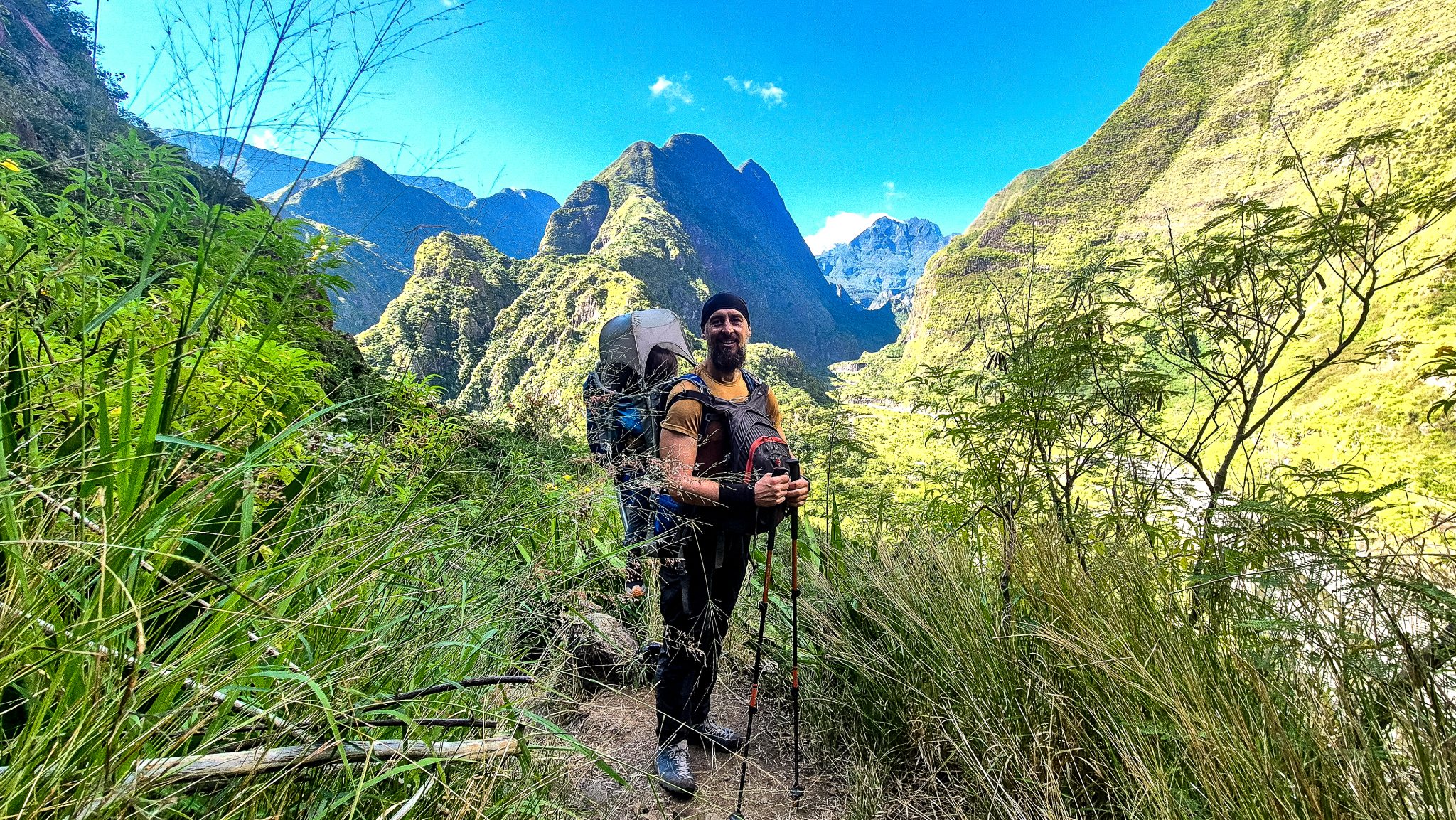
The island was formed by massive volcanoes, three of which eventually collapsed into themselves. What remained after those collapses, combined with millions of years of tropical erosion, looks almost unreal today. Huge rock walls, in places more than a kilometre high, surround vast natural amphitheatres known as cirques. It’s difficult to explain in a photograph, and honestly, even from the air it’s hard to fully understand what happened here.
Sometimes you walk along a narrow ridge between two immense abysses and feel as if you’re standing on the wall of some ancient lost city. Sometimes you cross from one side of these giant stone fortresses to the other. And sometimes you find yourself in a place that looks as though someone has ripped entire chunks out of the mountains.
Even more fascinating are the stories of the people who once lived here.
Until the 17th century, the island was completely uninhabited. When the French settled it, they established coffee and sugar-cane plantations on the gentler slopes near the coast and brought enslaved people from Africa and prisoners from across the empire to work on them. Many escaped into the inaccessible interior, where they founded small settlements and survived by cultivating the land. Some of those villages still exist today. A few still have no road access. Helicopters are often the only connection with the outside world.
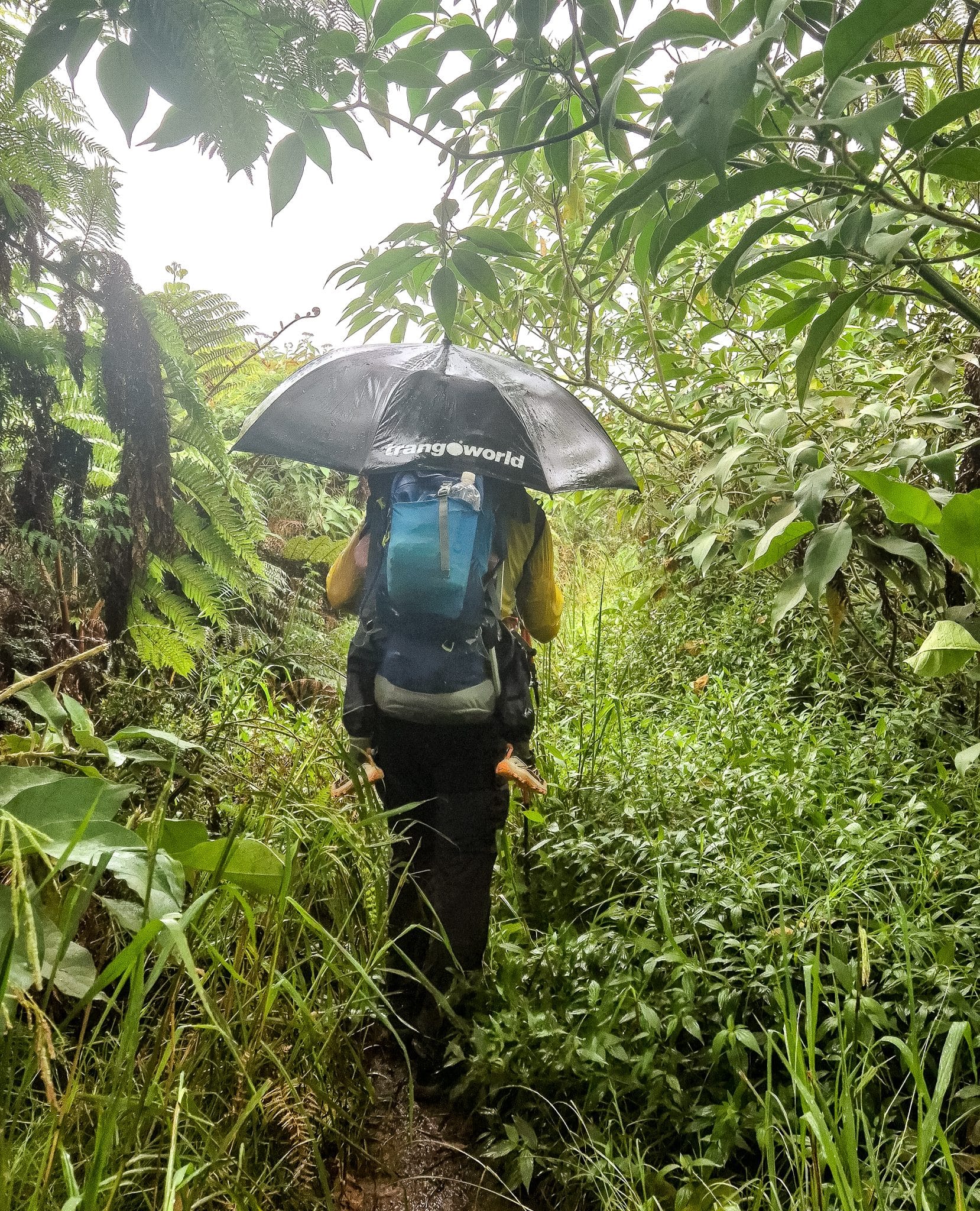
As you walk through these landscapes, you can’t help but wonder how anyone first pushed through the jungle, found a way across those cliffs, and decided to start a new life right there. And the best way to experience all of this is via the GR R2 hiking trail.
The route crosses almost the entire island and is maintained to the same standard as hiking trails in the French Alps. The signage is excellent, the paths are well maintained, and perhaps most importantly for parents, the whole route operates on a hut-to-hut system.
That means that every evening you arrive at a mountain lodge where a bed, a shower, dinner, and breakfast are waiting for you. There is no need to carry a tent, a stove, a sleeping bag, or all the other gear that usually turns family hiking into a major logistical operation.
Because of that, I was able to complete almost the entire route carrying only the essentials for myself and Rea. Well, “only” is a relative term — together with her, the child carrier, food, and water, my pack sometimes weighed more than 30 kilograms. Still, that’s a lot easier than carrying full camping equipment.
The full GR R2 traverse covers approximately 134 kilometres and around 10,100 metres of ascent. The current Fastest Known Time (FKT) belongs to French runner Quentin de Moncuit, who completed it in 2 days, 8 hours, and 9 minutes in July 2024 in the unsupported category, without any external assistance or logistical support.
Most hikers complete the route in 11 to 13 days. We originally planned to do it in eight, but ended up shortening the final stages slightly, finishing with a total of 105 kilometres and around 7,000 metres of ascent over seven days.
Steep trails and relentless elevation gain are the defining characteristics of the GR R2, and one of the reasons we chose it. We wanted something more intense. Families who prefer a gentler pace can easily organise their trip differently, staying in one of the cirques and doing shorter day hikes from there.
In fact, every family we met on the trail was travelling that way. We didn’t meet a single other family attempting the full traverse the way we did.
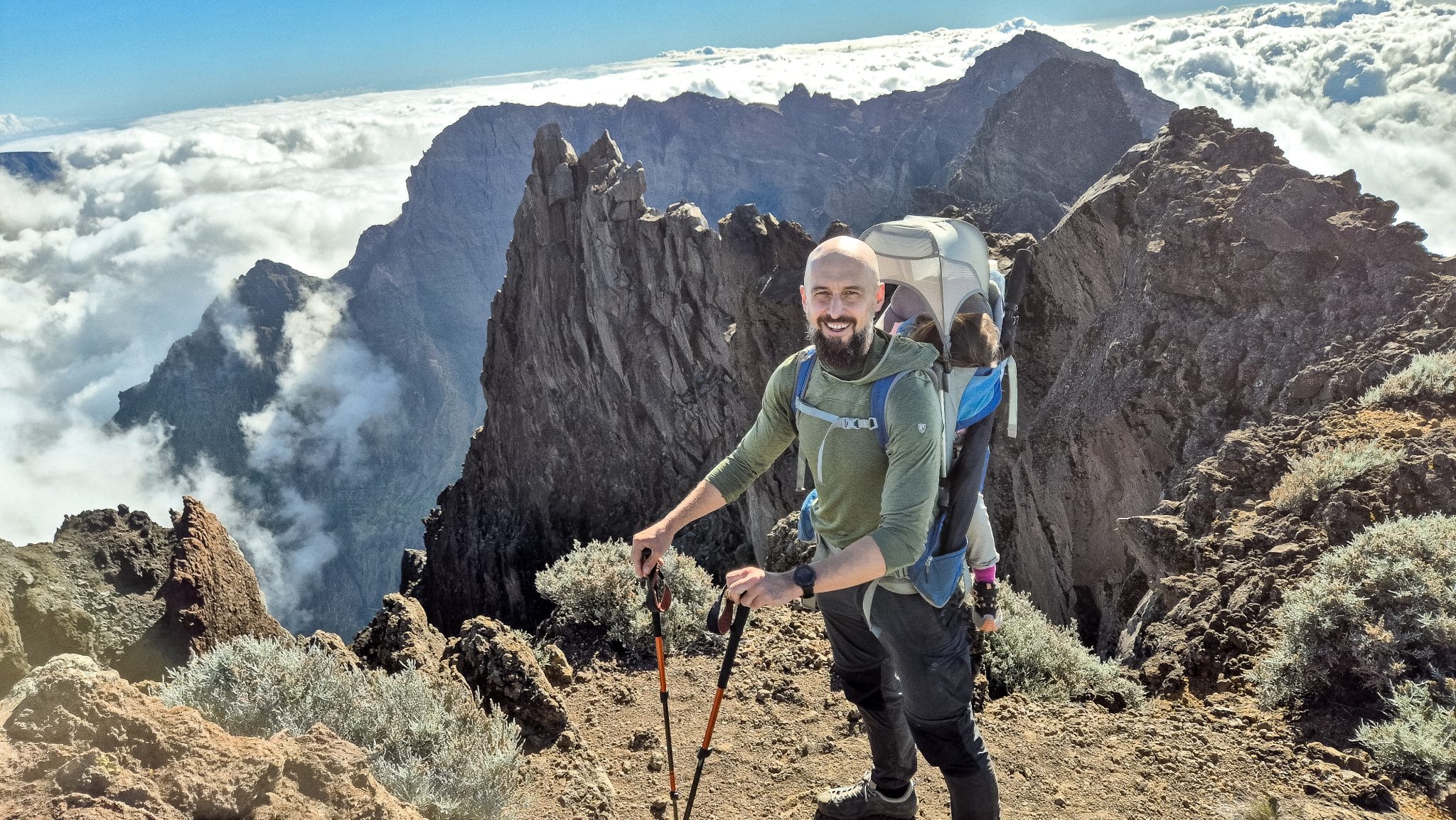
So how did Rea handle it all?
Honestly, better than I did.
While I was suffering on the climbs, she spent most of her time talking about dwarves living in the misty forest, singing songs, and asking me thousands of questions. Sometimes she walked on her own, sometimes she slept in the carrier, and sometimes she encouraged me on the steeper sections with her legendary phrase: “Come on, Daddy, you can do it!”
I think people often underestimate children. Or they overestimate the need for children to constantly be entertained by activities designed specifically for them. My experience suggests the opposite. What matters most to young children is simply being with the people they love. Wherever you put them, that’s where they grow.
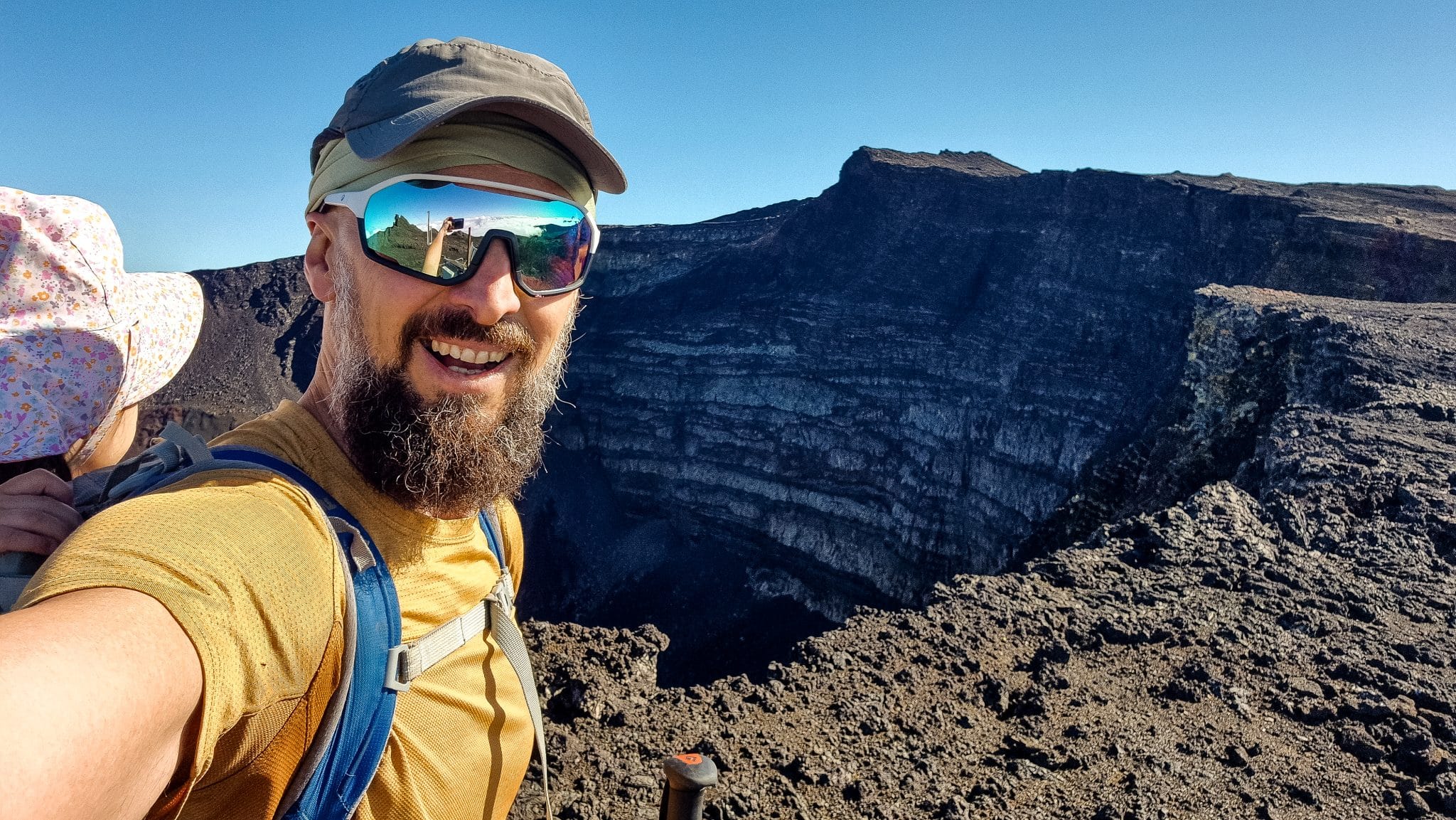
Of course, Réunion isn’t only a destination for parents with children. Had I gone alone or with a group of hikers, I would recommend it just as enthusiastically. In a single week you can walk from tropical jungle to high mountain ridges, climb the highest peak in the Indian Ocean (Piton des Neiges, 3,070 m), cross an active volcano, and finish the day swimming in the ocean.
But what impressed me most is that all of this comes without the usual compromises that exotic destinations often demand.
Réunion is wild and gentle at the same time. Exotic and familiar. Tropical and alpine. Remote enough to feel like the end of the world, yet easy enough that you dare to bring a three-year-old child along.
If you love mountains — and especially if you love mountains and have young children — Réunion is one of those places that deserves a spot on your bucket list. After more than twenty years of travelling around the world, there are very few places I can honestly say have no real competition.
I could almost say that about Réunion.